Booked appointment · principal appointment

Validator Desk

The Validator Desk is the reading room’s principal appointment. You sit with a reader, a printed worksheet, and one stake account you want to understand, and you leave with a page of notes in your own words.

Reserve a Validator Desk

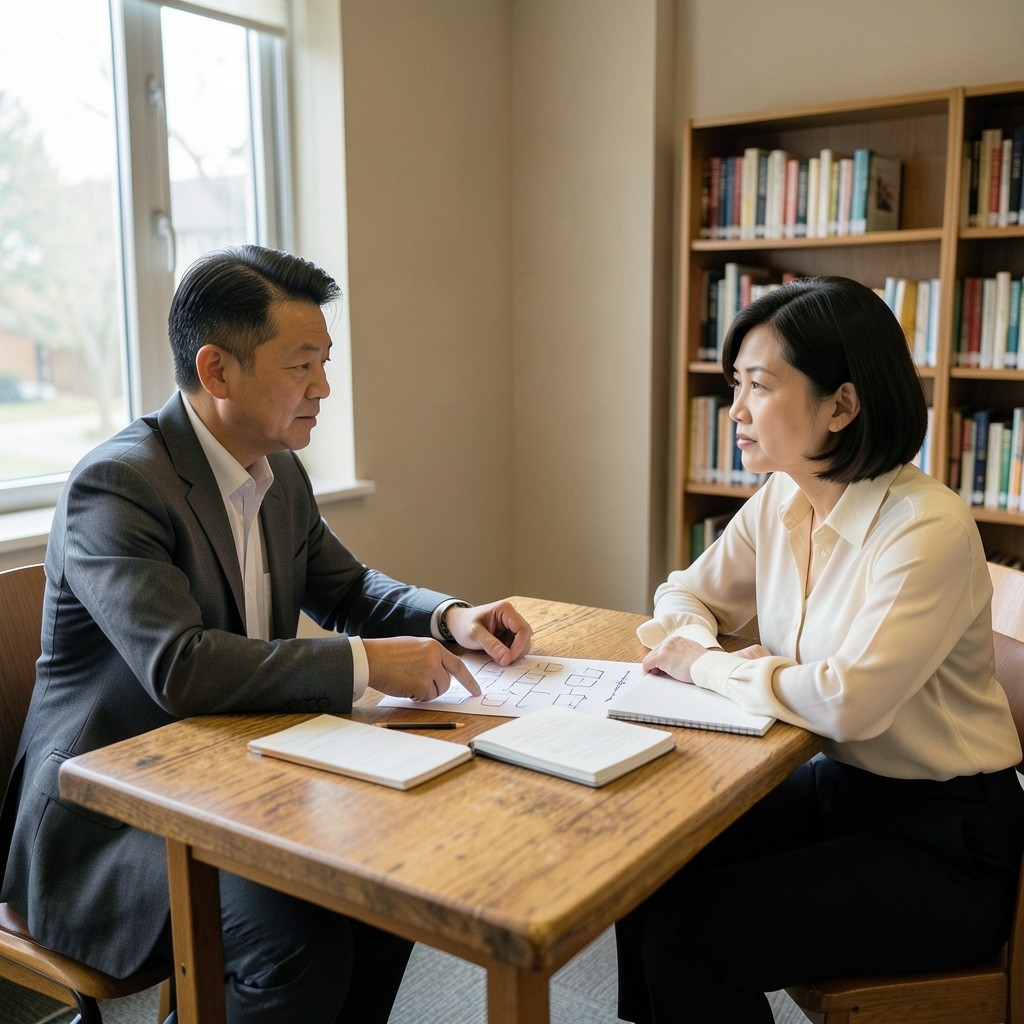
Two adults at an oak library desk studying printed worksheets together

Who sits for this

Adult readers who already hold SOL, or who plan to delegate, and want the stake program explained against a real public vote address. Pairs are welcome when they share one account or one decision. The desk is a poor fit for someone hunting a ranked list of validators.

What you carry home

You finish with a marked worksheet and a short note you wrote yourself: what the stake account points at, what commission is published today, how skip rate and vote credits differ, and whether warmup or cooldown applies to the move you are considering.

Who leads

Hana Seo leads Validator Desk appointments. Minjae Kwon covers the desk when Hana is with the Saturday circle.

Pace of the sitting

  1. OpeningTen minutes to name the question you want answered by the end, such as a commission change, a stuck activating balance, or a vote account you cannot parse.
  2. Stake accountTwenty minutes on authorities, delegation, lockup, and the difference between the SOL you can withdraw and the SOL that is still active.
  3. Vote accountThirty minutes on the validator side: commission, vote credits, and the identity key that signs blocks, kept distinct from the vote address you delegate to.
  4. Epoch clockThirty minutes on the current epoch boundary, and on warmup or cooldown if your stake is moving.
  5. Your noteTwenty minutes for you to write the explanation in plain sentences. The reader listens and fills gaps.
  6. CloseTen minutes on what you may do next, decided by you. The library does not submit transactions.

On the table

  • Two hours with a reader at the oak desk
  • A printed stake-account worksheet with Korean glosses
  • A public-address walkthrough using records you can recheck later
  • Tea, and a pencil if you arrived without one

Neighboring sittings

  • A Saturday group sitting is the Circle Workshop
  • A single narrow question in one hour is the Stake Reading Hour
  • Key storage, transaction signing, and validator operation sit outside the appointment

Before you travel

Bring a notebook. If you have a vote-account address you want to study, copy it onto paper before you travel. Sessions are held in English, and the worksheet carries Korean glosses for stake account, vote account, epoch, commission, warmup, and cooldown. Seed phrases and hardware wallets stay at home; the hour uses public addresses and printed examples.

House limits

The appointment seats one or two readers. It begins on the hour, and late arrival shortens the sitting. The room teaches from public cluster records. Visitors keep their own keys, and the choice of validator remains theirs. The next open weekday desks are posted at the room; Saturday mornings belong to the circle.

From first note to the chair

  1. Write to the room with a preferred date and the question you want on the worksheet.
  2. We confirm the desk and ask for a 30 percent holding deposit by Korean bank transfer.
  3. Arrive at Sudong-myeon a few minutes early. The remaining balance is due in cash or by transfer before the hour starts.
  4. Sit the two hours. You keep the worksheet.

See deposits and rates · Cancellation and refunds